
The crunch of fermented coleslaw mingles with the sweetness of root vegetables, creating a tantalizing contrast that’s both vibrant and tangy. In just a few hours of preparation followed by days of fermentation, you can transform simple cabbage and seasonal roots into a colorful and probiotic-rich addition to your meals. This recipe works because the natural fermentation process enhances flavors and preserves nutrients, giving you a delicious boost in health benefits.
This recipe is perfect for adventurous home cooks or anyone looking to enhance their diet with fermented foods. It’s an ideal dish to prepare during root vegetable season and can be made ahead of time for an easy fridge staple.
Why You’ll Love This Recipe
- The combination of colors and textures from various root vegetables makes each bite exciting.
- It’s an excellent way to preserve seasonal produce and reduce waste.
- Fermented coleslaw adds a zesty kick to sandwiches and salads.
- You can enjoy the health benefits of probiotics with every serving.
What You’ll Need
Gather everything before you start for a smooth cooking experience.
For the Slaw
- 1 medium head of cabbage
- 2-3 large beets
- 1 rutabaga, remove tough skin
- 2 turnips, remove tough skin
- 3 large carrots
- 1 large onion
- 4 cloves of garlic
- 1-2 celery roots
- 1 horseradish root
- 2-3 radishes
- 2-3 parsley roots
- 2-3 young salsify roots
- 2-3 young scorzonera roots
- 2-3 parsnips roots
- Bunch of dill
For the Seasoning
- Caraway seeds
- Salt
- 1-2 Tbsp pickling spice mix
- Cilantro seeds
- Dill seeds
- Peppercorn
- Mustard seeds
- Fresh or dried cayenne pepper, whole or crushed
- Fresh or dried ginger
- Fresh or dried turmeric
Use sea salt for better flavor preservation.
Substitutions & Swaps
- Any root vegetable can be swapped based on availability.
- Use dried dill if fresh is not available.
- Regular cabbage can replace specialty varieties like savoy or napa.
- Omit horseradish for a milder flavor profile.
How to Make It
Follow these steps for deliciously fermented coleslaw.
1. Wash your vegetables.
Wash all the vegetables and brush them lightly if necessary. No need to peel most, but make sure to remove the tough skin around mature rutabaga or turnips, especially if they are waxed.
2. Weigh your bowl.
Zero the weight of your bowl on the grams setting. This will help you accurately salt your vegetables later.
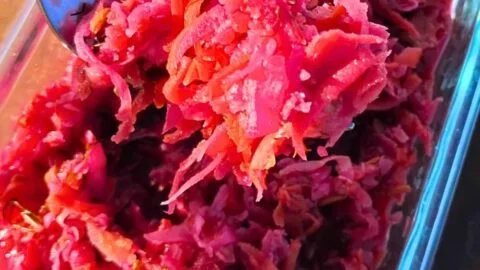
3. Prepare your vegetables.
Slice, chop, or grate your vegetables as desired. Aim for uniform sizes for even fermentation.
4. Salting.
Sprinkle salt over the mixed vegetables. The salt will help draw moisture out, which is essential for the fermentation process.
5. Work the slaw.
Mix and massage the salted vegetables until they start to release their juices. This should take around 5-10 minutes.
6. Bottle the slaw.
Pack the mixture tightly into sterilized jars. Leave some headspace at the top and ensure the vegetables are submerged under their own liquid.
7. Fermenting and maintenance.
Seal the jars and store them in a cool, dark place. Check daily to ensure the vegetables are still submerged and release gas as needed.
8. Storage.
Once fermented to your liking (usually 1-3 weeks), store the coleslaw in the fridge for optimal flavor preservation.
Tips for Best Results
- Ensure all equipment is sterilized to prevent unwanted bacteria.
- Use a mix of root vegetables for the best flavor and texture.
- Taste during fermentation to find your perfect balance of sourness.
- Keep the slaw submerged to prevent mold formation.
Serving Suggestions
- Serve alongside grilled meats for a refreshing contrast.
- Use it as a topping for fish tacos for added crunch.
- Add it to wraps or sandwiches for a flavorful zing.


Leave a Comment